—
Open windows temporarily flush radon out of your home, which can make summer test results look much lower than your actual year-round exposure. In Denver, that seasonal gap can be significant — and misleading.
Why Does Denver Have a Radon Problem in the First Place?
Colorado sits in EPA Zone 1 — the highest radon-potential category. Denver’s underlying geology is the reason. The region’s granite and uranium-rich soils constantly generate radon gas, which migrates upward through soil and enters homes through foundation cracks, slab joints, and crawl space openings.
We typically see around half of Denver metro homes test above the EPA’s 4.0 picocuries per liter (pCi/L) action level. The statewide average hovers near 6.3 pCi/L — well above that threshold. That’s not a minor variance. It means a home that appears fine in July could easily show elevated levels in October, once the windows close and the furnace starts running.
Denver’s altitude and semi-arid climate also matter here. Homes are tightly landscaped against cold winters, which means construction details — crawl spaces, slab-on-grade foundations, finished basements — all create multiple pathways for soil gas to enter. Understanding how radon behaves in your specific foundation type is part of getting an accurate picture.
—
How Do Open Windows Actually Lower Radon Readings?
Open windows dilute indoor radon concentrations by increasing air exchange with the outside. The effect is real — but it’s temporary and doesn’t address the source.
Radon enters your home continuously from the soil beneath it. Ventilation disperses it. When windows are open during Denver’s warmer months — typically May through September — fresh air cycles through the house frequently enough to keep concentrations lower than they’d be in a sealed home. A short-term charcoal canister test run during this period captures that diluted snapshot, not your actual chronic exposure.
The stack effect explains a lot of this. In winter, warm indoor air rises and escapes through upper floors, creating negative pressure at the foundation that actively pulls soil gas in. In summer, that pressure differential weakens — homes breathe more freely. So summer radon readings reflect two compounding factors: more ventilation and less soil gas draw. Both work in the same direction, both create artificially low readings.
A charcoal canister test run in July with windows open could easily read 1.5–2.0 pCi/L below what you’d see during closed-house winter conditions. That’s enough to push a borderline result under the action level — and give a false sense of safety.
—
When Is the Right Time to Test for Radon in Denver?
The most accurate single test window is fall or winter, when homes stay closed and the stack effect is strongest. That said, EPA-approved testing protocol matters more than season alone.
For a short-term charcoal canister test to be valid, EPA guidelines require closed-house conditions for at least 12 hours before and throughout the entire 2–7 day test period. That means windows and doors stay shut except for normal entry and exit. No open windows, no whole-house fans running continuously. In Denver summers, following those closed-house protocols is harder — people open windows at night to cool down, which immediately compromises the test.
A long-term test, which runs 90 days to a year, is actually more useful because it averages across seasons and daily habits. These passive alpha track detectors cost around $25–$60 for a DIY kit and capture a more honest picture of annual exposure. If you tested last summer with windows open and didn’t follow closed-house conditions, that result shouldn’t be your final answer.
Continuous radon monitors — devices like Airthings units that run year-round — are the most useful tool for ongoing awareness. They cost roughly $150–$300 and show you how levels shift between seasons, between day and night, and when ventilation habits change. For Denver homeowners who want real data rather than a single seasonal snapshot, understanding how to interpret ongoing radon test results is worth the time.
—
Does New Construction Protect Denver Homes From Radon?
Not automatically. Radon-resistant new construction (RRNC) features reduce entry points, but they don’t eliminate radon.
RRNC techniques include a gas-permeable gravel layer beneath the slab, a vapor barrier over exposed soil, and a passive vent pipe that can be activated with a fan if needed. These are built into many newer Denver homes — but passive systems without an active fan often provide only partial protection. In high-radon soil conditions common throughout the Denver metro, passive features alone sometimes aren’t enough.
In our experience, newer homes with RRNC features still test above 4.0 pCi/L regularly. The construction reduces risk — it doesn’t eliminate it. If you’re buying a new home in Denver or the surrounding communities, ask the builder whether the passive system has been tested and whether the rough-in is fan-ready. A post-construction test, run under proper closed-house conditions, is the only reliable way to know where you actually stand. Don’t rely on what the home looked like in summer with windows open.
—
How Does Seasonal Testing Affect What You Should Do Next?
| Testing Condition | Typical Reading Skew | Reliability for Annual Exposure |
|---|---|---|
| Summer, windows open, no closed-house protocol | 1.5–2.5 pCi/L low | Poor |
| Summer, windows closed, closed-house protocol followed | 0.5–1.0 pCi/L low | Fair |
| Fall/winter, closed-house protocol followed | Accurate or slightly high | Good |
| Long-term alpha track test (90+ days) | Seasonal average | Best for decisions |
| Continuous radon monitor (year-round) | Real-time + historical | Best for ongoing monitoring |
—
When Should You Call a Radon Professional?
If your test results are at or above 4.0 pCi/L — or if you’re not confident your previous test was run under proper conditions — it’s time to bring in a licensed professional.
Colorado requires radon mitigators to hold licensure through the Department of Regulatory Agencies (DORA). A licensed contractor will conduct a diagnostic assessment of your home’s foundation type, pressure field, and entry points before recommending a system. That matters because Denver homes vary — slab-on-grade, full basement, crawl space, or combinations — and the mitigation approach differs for each.
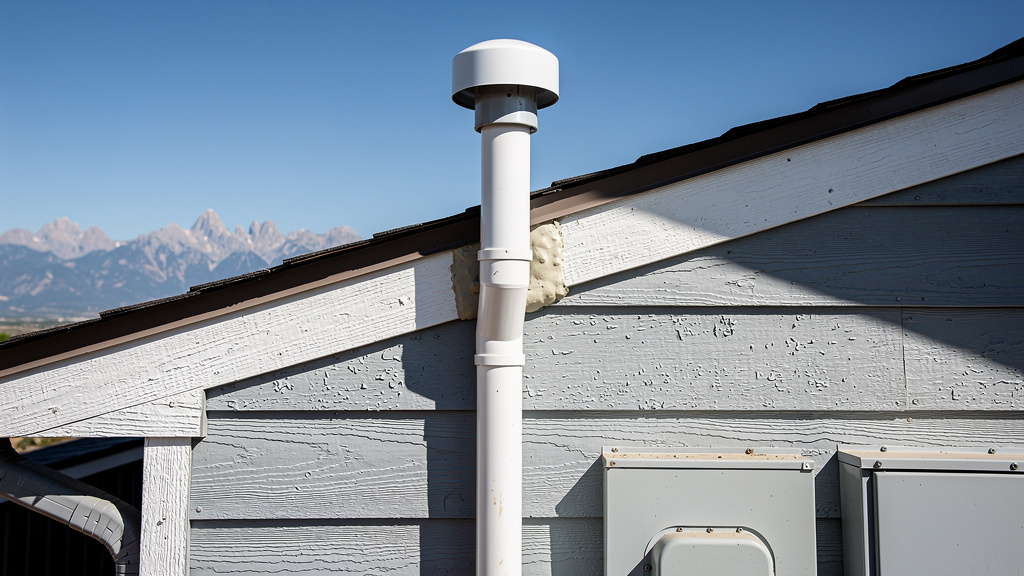
Sub-slab depressurization is the most common fix. A pipe is installed through the foundation slab and connected to a fan that runs continuously, drawing soil gas out before it enters. Most residential installations in Denver run between $800 and $2,500, with the average closer to $1,200–$1,500. Installation typically takes 3–5 hours for a standard single-system home.
If your levels test above 2.0 pCi/L on a properly conducted test, reviewing your options with a professional is worth doing — especially if children live in the home. Understanding what radon levels actually require mitigation in Denver helps you know when to act and when to monitor.
—
What Should Denver Homeowners Do Next?
First, check whether your previous test was run properly. If it was done in summer with windows open, treat it as a rough screen — not a final answer. Run a new test under closed-house conditions, or place a long-term alpha track detector for 90 days starting in September.
If results come back at or above 4.0 pCi/L on a valid test, schedule a professional assessment. Most licensed contractors in the Denver area can schedule within a few business days during non-peak seasons; fall scheduling tends to fill up faster as homeowners prepare for winter. If your result is between 2.0 and 4.0 pCi/L, consider a long-term test or continuous monitor before deciding on mitigation.
Keep records of every test — date, location in the home, device type, and conditions. You’ll need this documentation if you sell the home, and it’s useful context if you retest after any renovation or HVAC change.
—
FAQ
Q: Can I run a radon test in summer if I keep windows closed?
Yes, a closed-house test in summer is more reliable than an open-window test. Follow EPA closed-house protocol for at least 12 hours before and during the full test period.
Q: How much does a short-term radon test cost in Denver?
DIY charcoal canister kits run $15–$40. Professional short-term testing typically costs $150–$250 and includes lab analysis and a written report.
Q: Do finished basements have higher radon than upper floors?
Generally yes. Radon enters from soil contact points, so the lowest occupied level typically shows the highest concentration. Upper floors are usually lower but not always zero.
Q: How long does a radon mitigation system last in Denver?
Most sub-slab depressurization systems last 15–20 years. The fan is the component most likely to need replacement, typically after 10–15 years of continuous operation.
Q: Should I retest after installing a mitigation system?
Yes. Test within 24 hours after installation to confirm the system is working, then retest annually to verify performance hasn’t changed.
—
Sources
- U.S. Environmental Protection Agency: Home Buyer’s and Seller’s Guide to Radon and radon testing protocols
- U.S. Environmental Protection Agency: Radon Mitigation Standards and closed-house testing guidelines
- Colorado Department of Public Health and Environment: Radon in Colorado — FAQ and Mitigation Guidance
- Colorado Geological Survey: Radon Occurrence in Colorado — Geology and Risk
- Colorado Department of Regulatory Agencies (DORA): Radon Mitigation Contractor Licensing Requirements
- Colorado Environmental Public Health Tracking: Colorado Radon Statistics and Indoor Air Quality Data
—
RadonSweep helps Denver homeowners connect with licensed radon professionals who understand Colorado’s geology and building conditions. If you’re not sure whether your last test was accurate — or if summer readings left you with more questions than answers — getting a proper assessment scheduled before winter is a straightforward next step.