—
New construction homes in Denver can include radon-resistant features during the build, but those features don’t eliminate the risk. Most new homes still need testing — and many still need mitigation.
Why Does New Construction Radon Risk Matter in Denver?
Denver sits in EPA Radon Zone 1 — the highest-risk category — with average indoor radon levels around 6.3 pCi/L statewide, well above the EPA action threshold of 4.0 pCi/L. Colorado’s bedrock contains naturally occurring uranium, which decays into radon gas that migrates upward through soil and into buildings. That process doesn’t stop just because a home was recently built.
We typically see new construction buyers assume their home is safe because it’s new. That assumption leads to skipped testing and real exposure risk. Colorado’s geology doesn’t care how recently the concrete was poured. The Front Range corridor — including Denver proper and communities like Aurora, Lakewood, and Arvada — sits on soils that produce radon consistently. New homes are built sealed tight for energy efficiency, which can actually concentrate radon more effectively than older, draftier construction.
Summer is also a deceptive season. Open windows during warm months can temporarily dilute radon readings, making levels appear lower than they are during closed-house conditions. If you’re moving into a new Denver home this summer, don’t let a single warm-weather reading give you false confidence.
—
What Is Radon-Resistant New Construction and What Does It Actually Include?
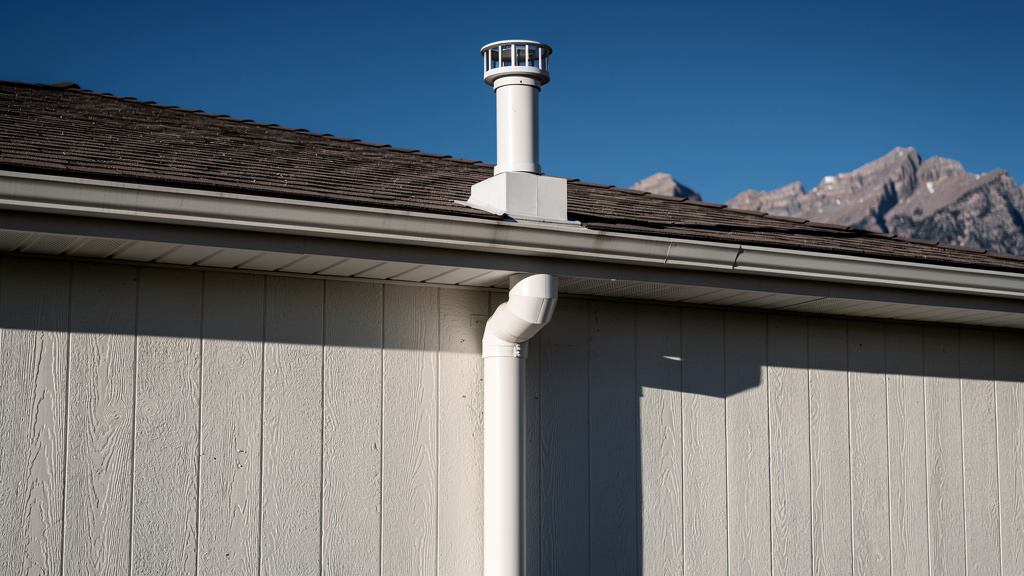
Radon-resistant new construction (RRNC) is a set of building techniques designed to reduce radon entry during the original build — not eliminate it entirely. The core components typically include a gas-permeable gravel layer beneath the slab, a plastic vapor barrier over that gravel, a sealed slab with capped pipes, and a vertical pipe routed from below the slab to above the roof.
That pipe is the key piece. In a passive RRNC system, the pipe relies on natural air pressure differences — the stack effect — to draw radon-laden soil gas up and out of the home. It works reasonably well in some conditions, but Colorado’s climate and soil variability mean passive systems don’t always perform consistently across seasons.
The system is also designed so a fan can be added later, converting the passive setup into an active sub-slab depressurization system. That conversion is straightforward and significantly more reliable. In our experience, homes with passive RRNC systems still test above 4.0 pCi/L often enough that we’d never recommend skipping the initial test just because the builder checked the RRNC box.
—
Does Colorado Require Radon-Resistant Features in New Homes?
Colorado does not have a statewide mandate requiring RRNC in all new residential construction. Some local jurisdictions have adopted requirements or encouraged RRNC through code adoption, but there’s no uniform rule across the Denver metro area. That means whether your new build includes any radon-resistant features depends heavily on the builder and the municipality.
The EPA and the Colorado Department of Public Health and Environment both recommend RRNC in new construction across Zone 1 areas like Denver — but recommendations aren’t mandates. Builders who include RRNC features are doing the right thing. Builders who don’t aren’t necessarily violating any law in most Denver-area jurisdictions.
This matters because buyers often discover radon features weren’t included only after closing. Before purchasing new construction, it’s worth asking the builder specifically which RRNC components were installed, requesting documentation, and understanding what would be required to add an active system if testing shows elevated levels. For context on what those testing results actually mean, understanding Denver radon testing basics is a useful starting point before the first post-move-in test.
—
How Well Do Passive RRNC Systems Actually Work?
Passive RRNC systems reduce radon entry, but the reduction isn’t guaranteed to bring levels below 4.0 pCi/L. The EPA estimates passive RRNC can reduce radon levels by up to 50%, but starting levels vary so much from lot to lot that the end result is unpredictable.
A home sitting on soil that produces radon at high concentration might still test above 4.0 pCi/L even with a well-installed passive system. Adjacent lots in the same development can read very differently — this is one of the most consistent patterns we see across Denver-area subdivisions. Your neighbor’s low test result tells you nothing reliable about your own home.
Activating the system with a fan — converting it from passive to active sub-slab depressurization — is the reliable fix when levels remain elevated. That conversion typically costs between $800 and $1,500 in the Denver area, depending on where the existing pipe terminates and whether electrical access is straightforward. Homes without any RRNC infrastructure in place may run closer to the full $800–$2,500 mitigation range for a complete installation. If you’re not sure whether your radon levels actually require mitigation, that’s worth reviewing before scheduling any work.
—
When Should You Test a New Construction Home in Denver?
Test within the first year of occupancy — ideally within the first few months after moving in. Conditions during initial construction and the first season of normal HVAC operation can affect early readings, so testing after the home has been lived in for 30 to 60 days gives a more representative baseline.
Use a long-term test (90 days or more) if you want the most accurate picture, or start with a short-term charcoal canister test (2–7 days) placed on the lowest regularly occupied level. Short-term DIY kits run $15–$40 at hardware stores. A professional continuous radon monitor (CRM) can be placed during an inspection and pulled within 48 hours, typically costing $150–$250 for the professional version. If the initial test comes back above 2.0 pCi/L, run a follow-up long-term test before making mitigation decisions.
—
How Do Passive and Active RRNC Systems Compare?
| Feature | Passive RRNC | Active RRNC (Fan-Activated) |
|---|---|---|
| Fan required | No | Yes |
| Typical radon reduction | Up to 50% | Up to 99% |
| Reliable below 4.0 pCi/L | Not guaranteed | Yes, in most cases |
| Conversion cost (if pipe in place) | N/A | $800–$1,500 |
| Full installation (no pipe) | Included during build | $800–$2,500 |
| Maintenance required | Minimal | Annual fan check ($0–$150) |
| Recommended for Zone 1 (Denver) | As starting point | Yes |
—
When Should You Call a Radon Professional?
Call a licensed Colorado radon professional if your new construction home tests at or above 4.0 pCi/L, or if you’re unsure whether the builder installed any RRNC components at all. Colorado requires radon mitigators to be licensed through the Department of Regulatory Agencies (DORA), so verify credentials before any work begins.
A few specific situations that shouldn’t wait:
- Test results above 4.0 pCi/L in any regularly occupied room
- Builder confirms no RRNC features were installed and you’re in a Zone 1 area
- You have a crawl space instead of a slab — crawl space radon dynamics are different and often require specific approaches
- Passive system pipe is present but levels remain elevated after testing
Don’t assume that because the system was builder-installed it was installed correctly. We’ve seen improperly sealed slabs and pipes that don’t reach adequate depth — issues that reduce system effectiveness significantly.
—
What Should Denver New Construction Buyers Do Next?
Before closing: Ask the builder for documentation of every RRNC component installed. Get it in writing. Confirm whether the system is passive or active, and where the pipe terminates.
Within 60 days of move-in: Place a radon test on the lowest occupied level under closed-house conditions. Summer testing with open windows is not reliable — test with the home operating normally.
If levels are elevated: Don’t wait on this. Radon exposure is cumulative. A licensed contractor can typically schedule an assessment within a few days and complete most fan installations in a single day, usually three to five hours of work.
Long term: Retest every two years even if initial results are low. Radon levels shift as homes settle, soil conditions change, and HVAC systems age.
—
FAQ
Q: Does a new construction home in Denver automatically have radon protection?
Not always. Colorado has no statewide mandate requiring RRNC. Whether your home has any radon-resistant features depends entirely on the builder and local jurisdiction.
Q: Can a passive RRNC system bring radon below the EPA action level?
Sometimes, but not reliably. Passive systems reduce entry but don’t guarantee results below 4.0 pCi/L in high-radon areas like Denver.
Q: How much does it cost to add a fan to an existing passive RRNC pipe?
In the Denver area, converting a passive system to active sub-slab depressurization typically costs $800–$1,500 depending on pipe location and electrical access.
Q: When is the best time to test a new Denver home for radon?
Within the first 60 days of normal occupancy, under closed-house conditions. Avoid relying on summer readings taken with windows open.
Q: Do new homes with RRNC features still need radon testing?
Yes. RRNC reduces risk but doesn’t eliminate it. Testing is the only way to confirm actual indoor levels after the home is occupied.
—
Sources
- U.S. Environmental Protection Agency: Radon-Resistant New Construction (RRNC) guidance and radon zone maps
- U.S. Environmental Protection Agency: Consumer’s Guide to Radon Reduction
- Colorado Department of Public Health and Environment: Radon program guidelines and recommendations
- Colorado Geological Survey: Radon occurrence and geology in Colorado
- Colorado Department of Regulatory Agencies (DORA): Radon professional licensing requirements
—
RadonSweep connects Denver homeowners with licensed Colorado radon professionals who understand the Front Range’s geology and the specific demands of new construction assessments. Whether you need a post-move-in test, a passive-to-active system conversion, or a full mitigation installation, the right professional can usually schedule an initial visit within a few days and complete most residential jobs in a single appointment.