—
Colorado sits in EPA Zone 1 — the highest radon-risk category in the country. Denver and the surrounding metro area fall squarely in this zone, with the state’s average indoor radon level around 6.3 pCi/L — well above the EPA action threshold of 4.0 pCi/L.
—
Why Is Denver’s Radon Risk Higher Than Most U.S. Cities?
Denver’s elevated radon risk comes directly from what’s underneath it. The Front Range geology — granite, gneissic bedrock, and uranium-rich soils — produces radon gas naturally and consistently.
Colorado sits at the intersection of two radon-generating factors that few other states share at the same scale: uranium-bearing rock formations and the dry, porous soil conditions that let gas move freely upward. At 5,280 feet, Denver’s thinner atmosphere doesn’t increase radon itself, but homes here tend to run heating systems harder and longer, which strengthens the stack effect — the natural air pressure difference that pulls soil gases up through foundation cracks and into living spaces.
In most Denver metro homes we test, the lowest occupied level — whether that’s a finished basement or a slab-on-grade main floor — shows the highest concentration. The Colorado Geological Survey identifies the entire Front Range corridor, from Fort Collins through Denver and into Pueblo, as a primary radon concern area. That includes Jefferson County, Arapahoe County, Douglas County, and Adams County — all common service areas where elevated readings are the rule rather than the exception.
Radon is responsible for approximately 500 lung cancer deaths per year in Colorado alone, making it the leading environmental cause of lung cancer among non-smokers in the state.
—
Which Colorado Regions Have the Highest Radon Levels?
The highest concentrations in Colorado are consistently found along the Front Range and in mountain communities — not randomly, but because the geology there is most uranium-rich.
Mountain counties like Gilpin, Clear Creek, Jefferson, and Boulder show some of the highest average indoor radon levels in the state. Denver County itself regularly produces test results above 4.0 pCi/L, and the Colorado Department of Public Health and Environment (CDPHE) data shows that a significant share of tested homes statewide exceed the EPA action level. The pattern holds across basement homes, slab foundations, and crawl space construction alike.
What surprises many homeowners is that rural mountain properties — Evergreen, Conifer, Black Hawk — often test higher than urban Denver addresses, simply because the bedrock is closer to the surface and the soil offers less dilution. New construction in these areas isn’t automatically safer either. A well-sealed, energy-efficient home can actually trap radon more effectively than an older drafty one. We see this regularly in newer subdivisions along the foothills where radon-resistant features weren’t included in the original build.
If you’re curious about what level triggers action, the threshold for mitigation in Denver homes starts at 4.0 pCi/L per EPA guidance, though Colorado health officials recommend considering action as low as 2.0 pCi/L.
—
Does Your Foundation Type Affect Radon Exposure in Colorado?
Foundation type influences how radon enters — not whether your property sits on radon-producing soil. Both matter, but they’re separate questions.
Basement homes in Denver provide more direct soil contact and more surface area for gas entry. Crawl space foundations allow radon to accumulate in an enclosed void before seeping into the main living area. Slab-on-grade construction — common in newer Denver suburbs — creates one large, direct contact point between the home and the soil. Each foundation type has a different entry pathway, but none is immune.
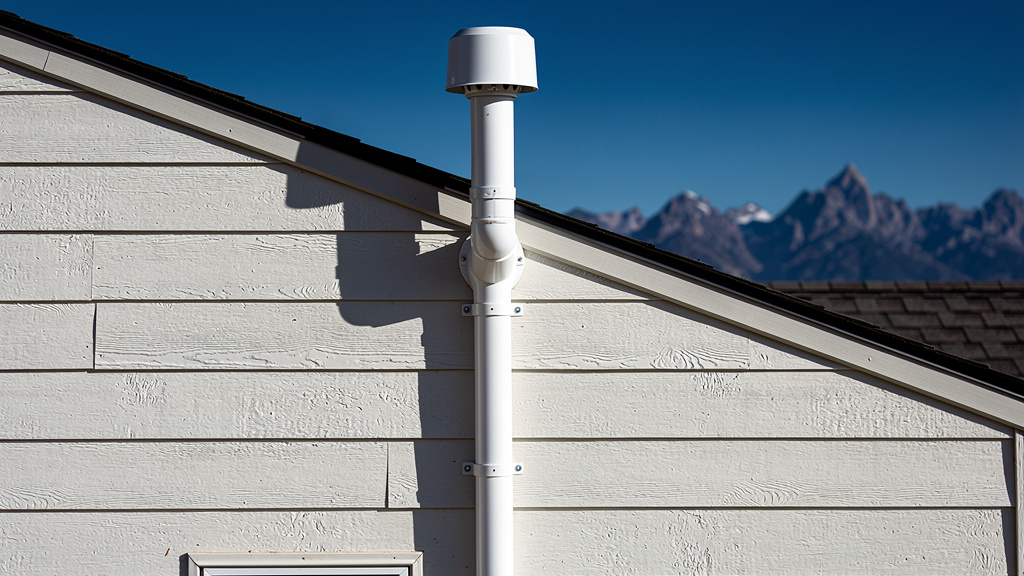
Sub-slab depressurization works across all three. The system routes a pipe through or beneath the foundation and uses a continuously running fan to draw radon from the soil before it enters the building. In most Colorado residential installations, this brings levels below 2.0 pCi/L. Standard installation on a single-entry-point system typically takes four to six hours, and most homes can be occupied the same day.
The Colorado Geological Survey notes that soil permeability plays a large role — loose, gravelly soils allow faster gas migration than dense clay. Much of the Denver metro’s native soil is a sandy clay mix, but gravel-heavy fills are common under older slabs in central Denver neighborhoods like Washington Park, Sunnyside, and Highlands.
—
How Does Summer Affect Radon Readings in Denver?
Summer is actually one of the trickier seasons to get an accurate baseline radon reading in Colorado — and most homeowners don’t realize this.
Open windows and doors during warm months create natural ventilation that dilutes indoor radon. A charcoal canister test run in July with windows open will often read lower than the same home in January with everything sealed up. This doesn’t mean the radon went away — it means the reading doesn’t reflect what your family breathes during the eight months Denver homes spend closed up against cold weather.
For the most representative results, the CDPHE recommends conducting long-term tests that span multiple seasons, or running a short-term test under closed-house conditions — windows shut for at least 12 hours before testing begins and throughout the test period. A continuous radon monitor (CRM) eliminates this guesswork entirely by logging levels hourly over weeks or months.
If you’re building or buying new construction this summer, ask specifically whether radon-resistant new construction (RRNC) features were included — a passive vent pipe, sub-slab aggregate, and a vapor barrier are the core components. They add minimal cost during construction but make active mitigation cheaper and easier if levels come in high after move-in.
—
How Do Colorado Radon Levels Compare to National Averages?
| Geography | Average Indoor Radon Level | % Homes Above 4.0 pCi/L |
|---|---|---|
| U.S. National Average | ~1.3 pCi/L | ~1 in 15 homes |
| Colorado Statewide Average | ~6.3 pCi/L | Estimated 50%+ |
| Denver Metro (tested homes) | Above 4.0 pCi/L common | Approx. 50% |
| Mountain Counties (Gilpin, Clear Creek) | Often 8–15+ pCi/L | Higher than metro |
| EPA Action Level | 4.0 pCi/L | — |
| EPA Consider-Mitigation Level | 2.0 pCi/L | — |
Colorado’s statewide average is nearly five times the national average. That gap reflects geology, not behavior — it’s a baseline condition that affects every home in the state regardless of age, size, or neighborhood.
—
When Should You Call a Radon Professional?
A test result at or above 4.0 pCi/L is the clear signal to stop waiting and schedule a professional assessment. At that level, mitigation isn’t optional — it’s the medically and technically supported response.
A few other situations call for a professional even before you have a confirmed high reading. If you’re buying or selling a home in the Denver metro, Colorado’s real estate radon disclosure requirements mean you need documented test results. If a previous test came back between 2.0 and 4.0 pCi/L and you haven’t followed up, a long-term test or CRM installation is the right next step. And if you’ve had a mitigation system installed but haven’t had it checked in more than two years, a professional fan inspection and U-tube pressure gauge check is worth scheduling — systems do fail quietly.
Colorado requires radon mitigation professionals to maintain state licensing through DORA (Department of Regulatory Agencies). When you’re scheduling work, confirm licensing upfront. A licensed contractor will also pull any required local permits — something DIY installations frequently skip, which can create issues at resale.
—
What Should Denver Homeowners Do Next?
Start with a test if you don’t have recent results. Short-term charcoal canister kits run $15–$40 at most hardware stores and provide a useful first screen. For a more complete picture — especially given Colorado’s seasonal variation — a long-term test kit ($25–$60) or a continuous radon monitor ($150–$300) will give you data across multiple conditions.
Place the test on the lowest regularly occupied level of your home. Follow closed-house conditions for the full test period. Keep the device away from exterior walls, windows, and high-humidity areas like bathrooms.
If results come back at or above 4.0 pCi/L, understanding the testing process before calling a contractor helps you ask the right questions and avoid unnecessary upsells. Most standard mitigation installs in the Denver metro run $800–$2,500, with a typical job falling around $1,200–$1,500 for a single-pipe sub-slab system.
Low-income households in Colorado may qualify for the Colorado Low Income Radon Mitigation Assistance Program, which covers up to $1,500 toward installation costs for eligible owner-occupied homes.
Don’t assume summer readings are your worst case. Test again in winter, or invest in a continuous monitor, before deciding you’re in the clear.
—
FAQ
Q: Is all of Colorado a high radon zone?
Most of Colorado is EPA Zone 1 or Zone 2 — both considered elevated risk. The Front Range and mountain counties consistently show the highest indoor levels in the state.
Q: Can a brand-new Denver home have high radon?
Yes. New construction without radon-resistant features can test higher than older homes because tighter building envelopes trap gas more effectively.
Q: How long does a radon mitigation installation take?
Most standard residential installs in Denver take four to six hours. Homes with complex foundations or multiple entry points may require a full day.
Q: Are radon test results different in summer versus winter?
Often yes. Open windows in summer lower readings artificially. Closed-house winter conditions typically produce higher, more representative results.
Q: Does radon only matter in basements?
No. Any room in direct contact with the ground can have elevated levels. Upper floors are usually lower but not always radon-free.
—
Sources
- U.S. Environmental Protection Agency: EPA Map of Radon Zones and radon action level guidance
- Colorado Department of Public Health and Environment: Radon program FAQ, testing recommendations, and estimated 500 annual lung cancer deaths attributed to radon in Colorado
- Colorado Geological Survey: Geology of radon occurrence along the Colorado Front Range
- Colorado Low Income Radon Mitigation Assistance Program: Eligibility and coverage information
- Colorado Department of Regulatory Agencies (DORA): Radon contractor licensing requirements
- National Radon Defense / Colorado radon contractor network: Regional cost data for mitigation installations in the Denver metro area, including the $800–$2,500 range for standard single-pipe sub-slab systems
—
RadonSweep connects Denver-area homeowners with licensed radon professionals who know Colorado’s geology and building conditions firsthand. Whether you need a first test, a second opinion on elevated results, or a mitigation system installed on a timeline that works for you, the network includes certified contractors serving Denver, Jefferson County, Arapahoe County, Douglas County, and surrounding communities — often with next-day scheduling available.