—
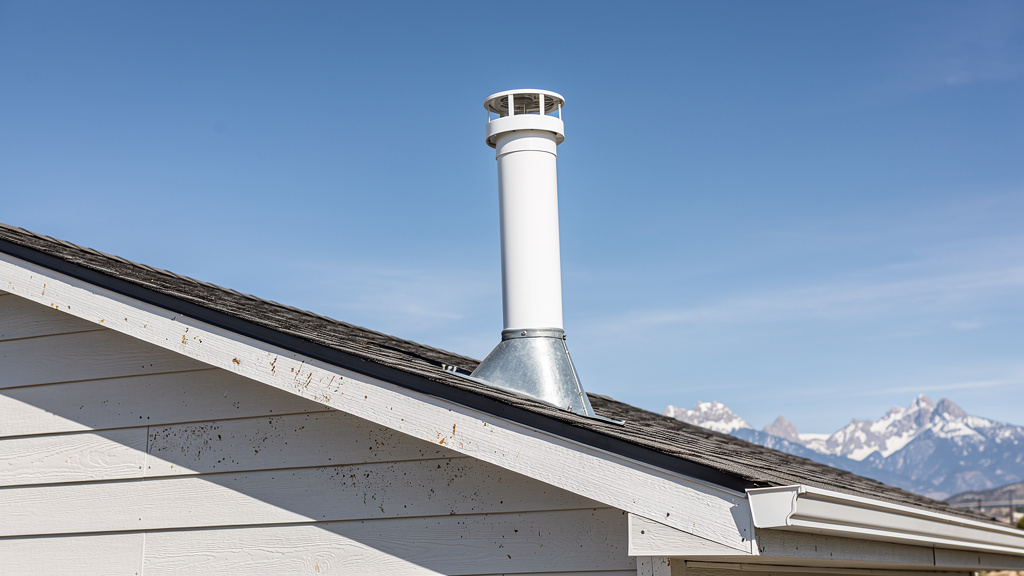
A radon mitigation installation in Denver typically takes four to eight hours. A licensed contractor installs a sub-slab depressurization system — drilling through your foundation, routing a pipe to the exterior, and connecting a fan that continuously draws radon out before it enters your home.
—
Why Radon Mitigation Is Particularly Relevant in Denver
Denver sits in EPA Zone 1, the highest radon potential category. Colorado’s granite and uranium-rich bedrock produces radon gas steadily, and the statewide average indoor radon level runs around 6.3 pCi/L — well above the EPA’s 4.0 pCi/L action threshold.
Denver’s stack effect makes this worse. Because heated air rises and escapes through upper floors, your home naturally pulls in soil gas from beneath the foundation to replace it. In colder months, that suction intensifies. Even in summer, when open windows might seem to help, they only temporarily dilute radon — levels climb back once the windows close.
Colorado’s Division of Regulatory Agencies (DORA) requires radon mitigation contractors to hold active state licenses, which means any professional working in the Denver metro should be able to provide proof of credentials before starting.
If you’re not sure whether your results actually require action, understanding what radon levels require mitigation in Denver homes is a good place to start before scheduling installation.
—
What Happens Before the Contractor Even Arrives?
Preparation starts with your test results, not the installation day. You need a confirmed reading at or above 4.0 pCi/L before scheduling mitigation.
If you only have a short-term charcoal canister result, a contractor may recommend a follow-up long-term test or a continuous radon monitor to confirm the reading before committing to installation. This is standard practice — not a delay tactic. One test in unusual weather conditions can skew results, and a good contractor wants accurate baseline data before designing your system.
Before the crew arrives, clear access to your basement or crawl space. The contractor will need to walk your foundation to identify the best suction point, check for sump pits or French drains, and assess your slab type. Homes with block-wall foundations, finished basements, or multiple foundation types take slightly longer to scope. In most Denver metro homes — particularly those built in the 1970s through 1990s — a single suction point through a poured concrete slab is sufficient.
—
What Does the Installation Process Actually Look Like?
The job itself follows a consistent sequence, though the exact steps vary slightly by foundation type.
First, the contractor drills a four-inch hole through your foundation slab, typically in an unfinished utility area. They extract a soil sample to verify the ground beneath has enough permeability to allow suction — this is called a diagnostic test, and it takes about fifteen minutes. If suction looks good, they proceed.
Next, PVC pipe runs from the suction point up through the house or along the exterior wall to above the roofline. Fan location matters here — the fan must be placed outside the living space so any radon vented by the system can’t re-enter the home. Interior pipe runs are sealed carefully at each joint.
The fan itself is hardwired to your electrical panel or connected to an existing outlet, depending on placement. Most installations use a dedicated circuit. A U-tube manometer — a small pressure gauge — is mounted on the pipe so you can see at a glance whether the system is running correctly. Installation typically wraps in four to eight hours for a standard single-family Denver home.
—
How Do You Know If the System Is Actually Working?
Post-installation testing is how you confirm the system is doing its job. Don’t skip this step.
Most contractors place a short-term test immediately after installation — typically a 48-hour charcoal canister — to establish a new baseline. For accurate results, the house should remain in closed conditions during that window. Because summer in Denver often means open windows and more airflow, summer post-install tests need to be treated carefully; an unusually low result right after install could reflect ventilation rather than system performance.
We typically see post-mitigation levels drop to between 0.5 and 1.5 pCi/L in Denver homes with well-designed systems. The EPA’s goal is to reach levels below 2.0 pCi/L after mitigation. If your post-install test still reads above 2.0 pCi/L, the contractor should return to assess whether a second suction point or a higher-capacity fan is needed — this happens more often in homes with unusual soil conditions or block foundation walls.
After initial testing, retest annually with a long-term monitor or charcoal canister. The manometer on your pipe is a daily check, not a replacement for periodic air testing.
—
What Does Radon Mitigation Installation Cost in Denver?
Most Denver homeowners pay between $950 and $2,500 for a professionally installed mitigation system. The statewide average lands around $1,200 to $1,500 for a standard sub-slab depressurization setup in a single-family home.
How Do Installation Costs Break Down in Denver?
| Cost Factor | Typical Range | Notes |
|---|---|---|
| Standard SSD system (single point) | $950 – $1,500 | Most common Denver install |
| Multi-point or complex foundation | $1,500 – $2,500 | Block walls, crawl space, additions |
| Electrical work (dedicated circuit) | $200 – $400 | If outlet isn’t already available |
| Post-install radon test | $0 – $150 | Often included by contractor |
| Annual maintenance/fan check | $0 – $150 | Fan inspection, manometer check |
| Low-income assistance (CDPHE program) | Up to $1,500 credit | Income-qualified Denver households |
Costs go up when the foundation is complicated — finished basements, additions over crawl spaces, or homes with both a slab and a dirt-floor section all add time and materials. Get a quote that includes post-installation testing; contractors who don’t offer it are worth questioning.
—
When Should You Call a Professional Instead of Attempting DIY?
DIY mitigation kits exist, but they carry real risks. A fan placed in the wrong location, an improperly sealed pipe joint, or a suction point in low-permeability soil can leave radon levels unchanged or even push gas into living spaces.
Call a licensed professional if:
- Your test results are at or above 4.0 pCi/L
- Your home has a finished basement or multiple foundation types
- You’re buying or selling — Colorado real estate disclosure rules now require radon documentation
- Previous DIY or unlicensed work was done and levels remain elevated
- You have a crawl space with exposed soil, which often requires a vapor barrier in addition to a fan system
Colorado’s DORA licensing requirement exists precisely because installation variables matter. A licensed contractor understands Denver’s soil conditions, building codes, and how to design a system that holds up through the city’s pressure and temperature swings across seasons.
—
What Should Denver Homeowners Do Next?
If you have test results showing 4.0 pCi/L or above, scheduling installation sooner is better than waiting. Radon exposure accumulates over time, and Colorado’s winters — with homes sealed tight for months — push levels higher.
If you haven’t tested yet, start there. What Denver homeowners should know about radon testing covers how to pick the right test type and placement for accurate results.
Once you have confirmed elevated levels, contact a DORA-licensed mitigation contractor in the Denver metro. Most can schedule a site assessment within a few days, with installation typically following within one to two weeks depending on seasonal demand. Spring and fall tend to be busiest — if you’re scheduling in summer or winter, turnaround is often faster.
After installation, keep your test records. You’ll need them if you ever sell, and they give you a real comparison point for future retesting.
—
RadonSweep connects Denver homeowners with licensed radon mitigation professionals who understand Colorado’s geology, building codes, and the specific challenges of the Denver metro. If your test results are elevated and you’re ready to schedule an installation assessment, RadonSweep can match you with a certified local contractor quickly — often with next-day availability.
—
FAQ
Q: How long does radon mitigation installation take in Denver?
Most standard installations in Denver single-family homes take four to eight hours. Complex foundations with multiple suction points or finished basements may require a second visit.
Q: Will I need to leave my home during installation?
No. Most homeowners stay home during installation. Drilling and fan placement create some noise and dust, but no hazardous conditions require evacuation during a standard sub-slab depressurization install.
Q: How soon after installation can I test radon levels?
Most contractors place a 48-hour post-install test immediately after finishing. Keep the house in closed conditions during that window for accurate results. Summer open-window habits can skew short-term readings.
Q: How long do radon mitigation systems last?
The fan is the only moving part and typically lasts 10 to 20 years. Pipe and fittings have an indefinite lifespan if properly sealed. Annual fan inspections keep the system running correctly.
Q: Does Colorado require a licensed contractor for radon mitigation?
Yes. Colorado’s Division of Regulatory Agencies (DORA) requires active state licensing for radon mitigation contractors. Always verify credentials before work begins.
—
Sources
- U.S. Environmental Protection Agency: Consumer’s Guide to Radon Reduction — mitigation methods, post-installation testing, and action level guidance
- Colorado Department of Public Health and Environment: Radon Program — statewide radon statistics, contractor licensing requirements, and Low Income Radon Mitigation Assistance Program details
- Colorado Division of Regulatory Agencies (DORA): Radon Program — contractor licensing standards and requirements
- Colorado Geological Survey: Radon in Colorado — geology of uranium-rich bedrock and radon occurrence by region
- National Radon Program Services (Kansas State University): EPA-approved radon testing protocols and closed-house conditions guidance