—
Look for a contractor who holds active Colorado DORA certification, carries liability insurance, and can show post-installation test results. In Denver’s high-radon geology, credentials and verified outcomes matter more than price alone.
Why Contractor Selection Matters More in Denver
Denver sits in EPA Zone 1 — the highest predicted radon potential category. Colorado’s uranium-rich granite and gneissic bedrock produce radon at rates well above the national average. The statewide average indoor radon level runs around 6.3 pCi/L, nearly double the EPA’s 4.0 pCi/L action threshold.
That geology creates real consequences for how mitigation systems get designed. A contractor who understands Denver’s soil variability — and who has worked across neighborhoods from Stapleton to Englewood to Lakewood — will approach system design differently than one following a generic checklist. Sub-slab conditions vary block by block in older Denver neighborhoods, and the wrong system design can underperform from day one.
Picking the wrong contractor doesn’t just waste money. A poorly installed sub-slab depressurization system can fail to reduce levels below 4.0 pCi/L, or in rare cases, make things worse by redistributing soil gases. Verification testing after installation is the only way to confirm the system is actually working.
—
What Credentials Should a Denver Radon Contractor Have?
Colorado requires radon mitigation professionals to hold a current license through the Department of Regulatory Agencies (DORA). That’s the baseline — no license, no hire.
Beyond state licensing, look for national credentials from either the National Radon Proficiency Program (NRPP) or the National Radon Safety Board (NRSB). Both organizations require passing a technical exam, ongoing education, and adherence to EPA mitigation standards. Contractors holding these credentials have demonstrated they understand not just how to install a fan and pipe, but how to design a system that actually works for your foundation type.
Ask directly: “Are you currently licensed with DORA, and do you hold NRPP or NRSB certification?” A legitimate contractor will answer immediately and can provide their license number. Colorado’s DORA database is publicly searchable, so you can verify before scheduling.
Also confirm they carry general liability insurance and workers’ compensation. Radon work involves drilling through foundation slabs and running electrical — gaps in coverage become your problem if something goes wrong on the job.
—
What Should a Radon Mitigation Estimate Include?
A detailed written estimate protects you and signals professionalism. Vague quotes often lead to surprise charges after installation.
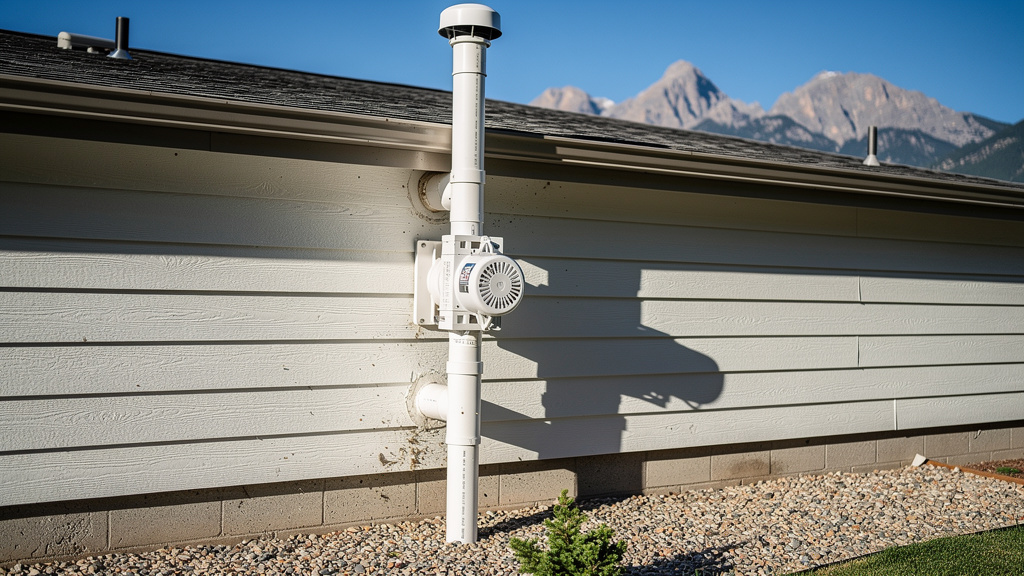
A proper estimate should specify the mitigation method (almost always sub-slab depressurization for Denver homes with concrete slab or basement foundations), the number of suction points, fan model and placement, whether electrical work is included, and what post-installation testing will confirm. Most residential installations in Denver take four to six hours from start to finish — same-day completion is standard for straightforward jobs.
If you’re comparing radon levels that require mitigation against contractor quotes, make sure each estimate is addressing the same problem. A home at 8.0 pCi/L with a complex slab may need two suction points where a simpler installation needs one. Quotes that look cheaper on paper are sometimes just skipping components.
Typical residential mitigation in Denver runs $800–$2,500, with most jobs landing around $1,200. Electrical hookup for the fan, if your panel access requires additional work, can add $200–$350. Exterior pipe routing choices — garage versus exterior wall — can also shift costs slightly.
—
What Questions Should You Ask Before Signing a Contract?
The right questions separate prepared contractors from those who will figure it out on your foundation.
Ask these before committing:
- Will you perform a diagnostic test before installation? Good contractors test suction points in the slab before finalizing their design. This confirms where soil communication is strongest.
- What fan model are you installing, and why? Fan selection should match your slab’s airflow characteristics — not just default to one model.
- Will you provide a post-mitigation radon test? The job isn’t done until post-installation results confirm levels dropped below 4.0 pCi/L. Some contractors include a continuous radon monitor reading; others use a short-term charcoal canister test.
- What’s your warranty on labor and the fan? Fan warranties from reputable manufacturers typically run five years. Labor warranties vary — one to two years is reasonable.
- Have you worked on homes similar to mine? Denver’s housing stock ranges from 1950s slab-on-grade ranch homes to newer construction with crawl spaces. Experience with your foundation type matters.
We typically see problems arise most often when homeowners skip the diagnostic conversation and just accept a one-size approach. The post-installation test is non-negotiable — it’s the only proof the system is working.
—
How Do Contractor Quality Signals Compare?
| Factor | Strong Signal | Weak Signal |
|---|---|---|
| Colorado DORA license | Current, verifiable | Expired or unavailable |
| National certification | NRPP or NRSB certified | None listed |
| Written estimate detail | Method, fan, suction points, electrical | Price only |
| Post-install verification | Included in scope | Extra charge or skipped |
| Pre-installation diagnostic | Suction point testing | No diagnostic performed |
| Typical job timeline | 4–6 hours, same day | Vague or multi-day |
| Fan warranty | 5 years manufacturer | Not disclosed |
| Response time | Next-day or within 48 hours | Weeks out with no explanation |
—
When Is This Serious Enough to Act Immediately?
If your radon testing results came back at 4.0 pCi/L or above, scheduling mitigation should happen within weeks — not months.
Levels above 8.0 pCi/L warrant faster action, typically within a few months. Anything above 20.0 pCi/L should be treated urgently. Radon exposure is cumulative — every month at elevated levels adds to lifetime dose. Denver’s winters compound this because homes stay sealed, strengthening the stack effect that draws soil gas upward.
A real estate transaction creates a hard deadline. Colorado’s radon disclosure requirements mean elevated test results must be disclosed to buyers. Getting mitigation completed before listing — and having post-installation results in hand — is far cleaner than negotiating a credit mid-transaction.
Open windows during summer can temporarily lower readings, but they won’t maintain safe levels once homes close back up. If summer testing showed elevated numbers, expect winter readings to run higher.
—
What Should Denver Homeowners Do Next?
Start by gathering your test results. If you don’t have them, a short-term charcoal canister test ($15–$40 DIY, or $150–$250 professionally administered) gives you a baseline within 48–96 hours.
Once you have results, contact two or three DORA-licensed contractors. Request written estimates that include diagnostic testing, system design specifics, and post-installation verification. Check each contractor’s license status in the DORA database before scheduling.
If cost is a barrier, ask contractors whether your household qualifies for Colorado’s Low Income Radon Mitigation Assistance Program, which offers up to $1,500 toward installation for eligible owner-occupied homes.
Don’t sit on elevated results waiting for a “better time.” Most Denver contractors can schedule initial consultations within a few days and complete installations the same week for straightforward homes.
—
FAQ
Q: How do I verify a Denver radon contractor’s license?
Search the Colorado DORA license lookup tool online using the contractor’s name or business. Active licenses are publicly listed and show current status in under a minute.
Q: How long does radon mitigation installation take?
Most residential jobs in Denver take four to six hours. Same-day completion is standard for homes with accessible slabs and straightforward suction point placement.
Q: Should I get multiple quotes for radon mitigation?
Yes. Get two to three written estimates. Compare scope, not just price — post-installation testing and diagnostic work should be included, not optional add-ons.
Q: Do new Denver homes need radon mitigation?
Possibly. New construction can test higher than older homes depending on soil and foundation design. Radon-resistant features help but don’t guarantee safe levels without testing.
Q: What happens if a mitigation system doesn’t lower my radon levels enough?
A reputable contractor will return to adjust suction points or upgrade the fan. Post-installation testing exists for exactly this reason — confirm in writing that follow-up is included.
—
Sources
- U.S. Environmental Protection Agency: Consumer’s Guide to Radon Reduction — mitigation methods, contractor selection, and post-installation verification guidance
- Colorado Department of Regulatory Agencies (DORA): Radon contractor licensing requirements and public license verification database
- Colorado Department of Public Health and Environment: Radon program guidelines, state average radon levels, and Low Income Radon Mitigation Assistance Program
- National Radon Proficiency Program (NRPP): Certification standards for radon mitigation professionals
- National Radon Safety Board (NRSB): Certification requirements and continuing education standards
- Colorado Geological Survey: Colorado bedrock geology and radon occurrence in uranium-bearing formations
- U.S. Environmental Protection Agency: EPA Radon Zone Map — Zone 1 designation for Denver metro area
—
RadonSweep helps Denver homeowners connect with certified radon mitigation professionals who know Colorado’s geology and meet the state’s licensing standards. If you’ve got test results in hand and need to move forward, the contractor network here focuses on verified outcomes — not just installations.