—
Denver schools and workplaces can have elevated radon levels just like homes — sometimes higher. Colorado sits in EPA Zone 1, the highest-risk category, and any building in contact with the ground is a potential exposure point.
Why Does Radon Risk in Denver Go Beyond Your Home?
Colorado’s geology drives radon risk across every building type, not just residential ones. The uranium-rich bedrock and soils beneath the Denver metro release radon gas continuously. That gas follows the path of least resistance — through foundation cracks, floor drains, and utility penetrations — into whatever structure sits on top, whether it’s a house, an elementary school, or an office building.
The statewide average indoor radon level in Colorado runs around 6.3 pCi/L, well above the EPA action level of 4.0 pCi/L. Denver specifically sits in EPA Zone 1, meaning the predicted average indoor radon concentration exceeds 4.0 pCi/L. That risk doesn’t pause when you leave your house for the day. Adults spending eight or more hours in a school or office building accumulate significant exposure, especially during Colorado’s long winters when buildings stay tightly sealed for months at a time.
Understanding how radon testing works in Denver homes is a useful starting point — the same measurement principles apply in schools and commercial spaces.
Are Denver Schools Required to Test for Radon?
Colorado does not currently mandate radon testing in public schools by state law, though the EPA has recommended school testing since 1993. Some Denver-area districts have tested voluntarily, but there is no uniform requirement that guarantees every classroom has been checked.
The EPA’s guidance for schools recommends testing all rooms that contact the ground, including basements, first-floor classrooms, gymnasiums, cafeterias, and administrative offices. Schools present a particular concern because children breathe more air per pound of body weight than adults, which increases their relative exposure during the same amount of time in a given space.
In our experience, schools built on slab-on-grade foundations — common in suburban Denver districts — can accumulate radon in ground-floor rooms just as quickly as any residential slab. The size of the building doesn’t dilute the risk when entry points are present. Parents in Jefferson County, Adams County, and Denver County have a legitimate reason to ask their school district whether testing has been completed and what the results showed.
What About Radon in Denver Office Buildings and Workplaces?
OSHA does not set a specific enforceable radon limit for workplaces, but the EPA recommends the same 4.0 pCi/L action level for commercial spaces. Employer responsibility in Colorado falls into a gray area — there’s no state law forcing testing, but the general duty clause under federal occupational safety rules means employers can be held responsible for known hazards they fail to address.
Workplaces where employees spend significant time in below-grade or ground-contact spaces — think server rooms, storage areas, fitness centers, or ground-floor offices in older Denver buildings — carry the same exposure dynamics as a basement in a residential home. The stack effect, where warm air rises and escapes through upper levels while drawing soil gas in from below, operates in commercial buildings just as it does in houses.
If you work in a building with basement-level offices or spend most of your day on the ground floor of an older structure near the foothills, it’s reasonable to ask your facilities manager whether radon testing has been done. Testing a commercial space typically involves placing continuous radon monitors or charcoal canisters in occupied areas for 48 to 90 days, depending on the method used.
How Do Radon Levels in Large Buildings Compare to Homes?
| Setting | Typical Action Level | Testing Method | Avg. Testing Cost | Mitigation Complexity |
|---|---|---|---|---|
| Single-family home | 4.0 pCi/L (EPA) | Charcoal canister or CRM | $150–$250 (professional) | Low–moderate |
| School (ground floor) | 4.0 pCi/L (EPA guidance) | Multi-point CRM deployment | $500–$2,000+ per building | Moderate–high |
| Office building | 4.0 pCi/L (EPA recommendation) | Charcoal or CRM per zone | $300–$1,500 per zone | Moderate–high |
| Daycare / childcare facility | 4.0 pCi/L (EPA) | Same as school | $500–$1,500 per site | Moderate–high |
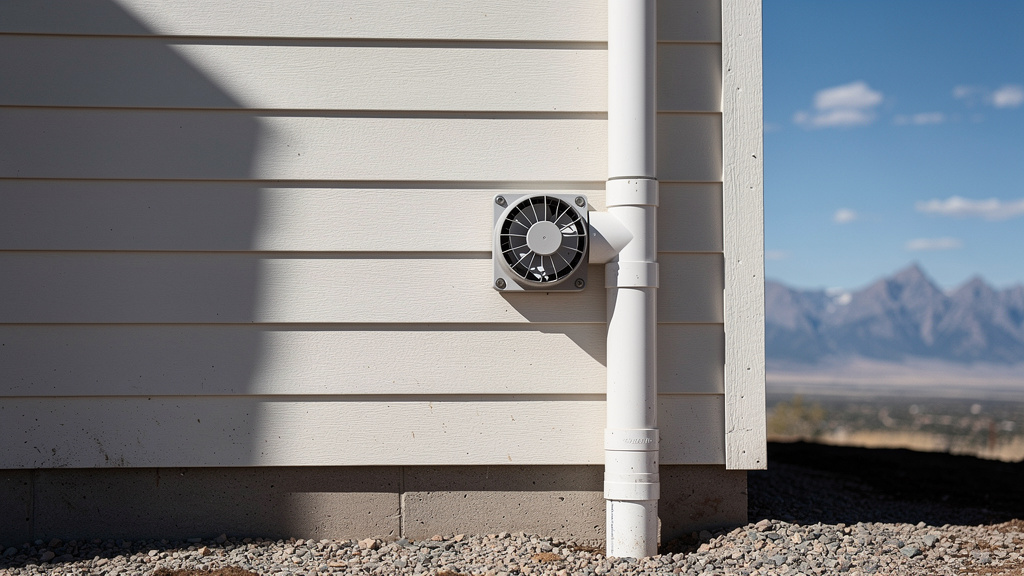
Mitigation in large commercial buildings follows the same sub-slab depressurization logic as residential systems — a pipe through the slab draws radon-laden air from the soil and exhausts it outside — but the scale requires more suction points, larger fans, and more complex routing. A typical residential mitigation system costs between $800 and $2,500. Commercial jobs run higher, often $3,000 to $10,000 or more depending on square footage and foundation complexity.
For context on what triggers mitigation action, this breakdown of radon levels and Denver home mitigation thresholds covers the same EPA framework that applies to non-residential buildings.
What Can Parents and Employees Actually Do About This?
Direct action is available to anyone concerned about a school or workplace. Parents can submit a written request to their school principal or district facilities director asking for radon test records. If no testing has been done, Colorado’s high-risk designation gives that request real weight. The EPA provides a free guide specifically for school testing protocols, and some districts will act on a well-documented parent concern.
Employees can raise the issue with a human resources or facilities contact in writing, which creates a paper trail. If a building manager is unresponsive to a known concern, OSHA’s general duty clause provides a potential avenue for escalation.
For anyone in a leadership role at a school, daycare, or office — facilities directors, building managers, PTA officers — commissioning a professional radon assessment is a straightforward step. A licensed Colorado radon professional can deploy continuous radon monitors across multiple zones in a building over a two-to-four week period and return a clear report with measurements by room. The process is minimally disruptive and produces defensible, actionable data.
When Should a Professional Handle This?
Non-residential buildings are not a DIY situation. The testing footprint is larger, the mitigation design is more complex, and Colorado requires radon professionals to hold state licensing through DORA (the Department of Regulatory Agencies). If a school or commercial space tests above 4.0 pCi/L, a licensed contractor experienced with commercial mitigation should design the system — not a residential-only installer.
Signs that a building needs professional assessment without delay: any ground-floor space measuring above 4.0 pCi/L on a short-term test, buildings where prior testing was done more than five years ago without follow-up, and any structure that has undergone major HVAC changes or renovations since the last test. HVAC changes in particular can dramatically shift the pressure dynamics inside a building and invalidate older test results.
What Denver Parents and Employees Should Do Next
Start by asking. Contact your school district’s facilities department or your employer’s building manager and ask for written documentation of radon testing results. If records exist, check whether the test was conducted in regularly occupied rooms on the ground floor — not just in mechanical rooms or storage areas, which is where some early school testing was focused.
If no records exist, push for testing. Colorado’s EPA Zone 1 status is a clear reason to prioritize it. For schools specifically, the EPA’s protocols recommend testing every ground-contact room and retesting every five years or after major renovations.
If you’re concerned about your home environment in parallel, understanding radon risks in crawl spaces and below-grade foundation areas is a natural next step — the same soil gas entry points that affect schools affect residential foundations too.
—
FAQ
Q: Are Colorado schools required by law to test for radon?
No. Colorado has no state mandate requiring schools to test for radon, though the EPA has recommended school testing since 1993. Many Denver-area districts have tested voluntarily, but coverage is not uniform.
Q: What radon level triggers action in a school or workplace?
The EPA recommends the same 4.0 pCi/L action level for schools and workplaces as for homes. Some guidance for schools suggests acting at lower levels given children’s higher relative exposure.
Q: How long does radon testing take in a commercial building?
Short-term commercial testing typically runs 48 to 90 days using continuous monitors or charcoal canisters placed across multiple zones. Larger buildings may require several weeks for a complete picture.
Q: Can a parent or employee legally request radon test results?
Yes. Parents can request records from school districts and employees can request records from building management. Public schools may be subject to open records requests under Colorado law.
Q: Does Denver’s altitude affect radon levels in buildings?
Denver’s elevation at 5,280 feet doesn’t directly increase radon concentrations, but it contributes to the tight building conditions in winter that allow radon to accumulate indoors across all building types.
—
Sources
- U.S. Environmental Protection Agency: Radon in Schools — testing protocols and action level guidance for educational facilities
- U.S. Environmental Protection Agency: EPA Map of Radon Zones — Zone 1 designation for Denver and Colorado counties
- Colorado Department of Public Health and Environment: Radon in Colorado — statewide average levels and risk context
- Colorado Department of Regulatory Agencies (DORA): Radon Contractor Licensing Requirements — state licensing standards for radon professionals
- U.S. Occupational Safety and Health Administration: General Duty Clause, Section 5(a)(1) of the OSH Act — employer responsibility for known workplace hazards
- Colorado Geological Survey: Radon Potential in Colorado — uranium-bearing geology and radon occurrence across the Front Range
—
RadonSweep connects Denver-area homeowners, parents, and building managers with licensed Colorado radon professionals who understand the specific geological conditions driving elevated levels across the metro. If you have questions about testing a school, workplace, or your own home, a qualified professional in the RadonSweep network can walk you through the process and schedule an assessment that fits your timeline.