—
The EPA sets the radon action level at 4.0 picocuries per liter (pCi/L). At or above that number, mitigation is recommended. In Denver, where average indoor radon runs well above that threshold, this number matters more than most homeowners realize.
Why Does Denver Have a Radon Problem in the First Place?
Denver’s radon risk comes directly from the ground beneath it. Colorado’s bedrock — particularly the granite and gneissic formations that run through the Front Range — contains naturally occurring uranium. As that uranium breaks down, it produces radon gas, which migrates upward through soil and into homes through foundation cracks, slab penetrations, and even poured concrete.
Denver sits in EPA Zone 1, the highest-risk category, meaning the EPA predicts average indoor levels above 4.0 pCi/L. Colorado’s statewide average indoor radon level is around 6.3 pCi/L — more than twice the national average of roughly 1.3 pCi/L.
Homes closer to the foothills, from Morrison through Arvada and into Jefferson County, tend to run higher still. The Denver metro’s mix of slab-on-grade construction, full basements, and older crawl spaces gives radon multiple entry points. The stack effect — natural air pressure differences that pull soil gases upward — operates year-round in Denver, but gets stronger in winter when homes seal up tight.
What Does 4.0 pCi/L Actually Mean in Plain Terms?
The 4.0 pCi/L action level is the point where the EPA determined mitigation becomes both necessary and reliably achievable in residential construction.
“Picocuries per liter” measures how many radioactive decay events are happening per liter of air in your home. At 4.0 pCi/L, the long-term lung cancer risk from radon exposure becomes significant enough that doing nothing is no longer a reasonable choice. The EPA estimates radon causes around 21,000 lung cancer deaths nationally each year, making it the second leading cause of lung cancer after smoking.
In Colorado specifically, radon accounts for approximately 500 lung cancer deaths annually — and the majority of those are in non-smokers. That’s not an abstract statistic. We typically see roughly half the homes tested in the Denver metro come back at or above 4.0 pCi/L. The risk is real, it’s measurable, and it’s addressable.
The 4.0 threshold isn’t where risk begins — it’s where the EPA determined the cost-benefit calculation clearly favors action. Some health organizations, including the World Health Organization, use a lower reference level of 2.7 pCi/L. Colorado health guidance also recommends considering mitigation between 2.0 and 4.0 pCi/L, especially for families with children or a history of lung disease.
How Do You Know What Level Your Home Has?
Testing is the only way to find out — you cannot smell, see, or feel radon.
Short-term charcoal canister tests run 48 to 96 hours and cost around $15–$40 for a DIY kit from a hardware store. Professional short-term testing runs $150–$250 and usually includes result interpretation. For a solid baseline, what Denver homeowners need to know about radon testing goes deeper on test placement, timing, and how to read results accurately.
Long-term tests run 90 days or more and give a better picture of your annual average exposure. DIY long-term kits cost roughly $25–$60. A continuous radon monitor (CRM) — devices like those made by Airthings — runs $150–$300 and provides ongoing readings rather than a single snapshot.
One thing worth knowing about summer testing: open windows can dilute radon readings temporarily, which means a summer test sometimes underestimates your actual year-round average. If you’re testing now and results come back just under 4.0, a follow-up long-term test through the fall and winter gives a more reliable picture.
What Happens If Your Results Come Back Above 4.0 pCi/L?
Mitigation. That’s the answer, and it’s more straightforward than most people expect.
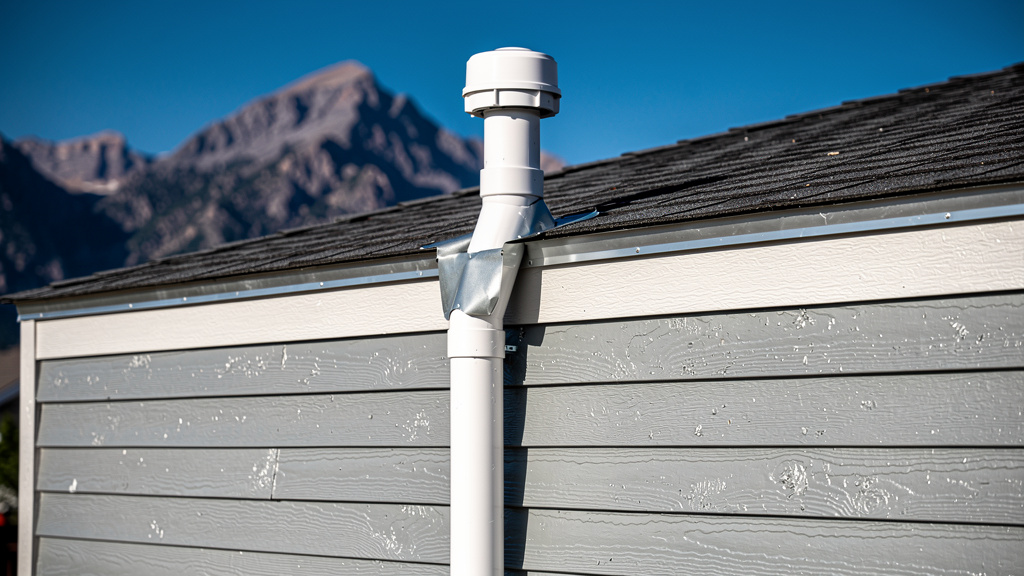
The standard fix is a sub-slab depressurization system — a licensed contractor installs a pipe through the foundation slab, connects it to a fan, and vents it above the roofline. The fan runs continuously, drawing radon from beneath the slab before it can enter the living space. A typical installation in Denver takes four to six hours and leaves the home with a small, unobtrusive pipe on the exterior.
For a breakdown of which radon levels require immediate action versus a measured response, this guide to radon levels and mitigation thresholds in Denver is a useful reference.
Radon levels above 8.0 pCi/L should be addressed within a few months. Anything above 20.0 pCi/L warrants faster action — within weeks rather than months. At those concentrations, cumulative exposure adds up quickly.
How Much Does Radon Mitigation Cost in Denver?
| Radon Level (pCi/L) | Recommended Action | Timeline | Estimated Cost |
|---|---|---|---|
| Below 2.0 | No action needed | N/A | $0 |
| 2.0–4.0 | Consider mitigation | Within 2 years | $800–$1,700 |
| 4.0–8.0 | Mitigation recommended | Within 2 years | $950–$2,000 |
| 8.0–20.0 | Mitigation required | Within months | $1,200–$2,500 |
| Above 20.0 | Immediate action | Within weeks | $1,500–$3,000+ |
In the Denver metro, most standard sub-slab depressurization installations fall between $950 and $2,000, with the average sitting around $1,200–$1,300 for a straightforward single-entry-point system. Homes with multiple foundation types — a partial basement plus a crawl space, for example — may need additional suction points, which adds cost. Annual maintenance is minimal: a fan inspection and a U-tube manometer check typically runs $0–$150 depending on your contractor.
Colorado also offers the Low Income Radon Mitigation Assistance Program through the Colorado Department of Public Health and Environment, which provides up to $1,500 for eligible owner-occupied households.
When Should You Call a Professional Instead of Handling It Yourself?
Any test result at or above 4.0 pCi/L calls for a licensed professional — not a DIY system.
DIY mitigation kits exist, but improper installation can redistribute radon rather than remove it, and may create negative pressure issues or violate local building codes. Colorado requires radon mitigation contractors to maintain licensing through the Department of Regulatory Agencies (DORA). That licensing exists for good reason — Denver’s varied foundation types, soil conditions, and building vintages mean system design isn’t one-size-fits-all.
Other situations where professional assessment makes sense: test results that vary significantly between floors, any real estate transaction (Colorado requires radon disclosure as of August 2023), and any home showing results between 2.0 and 4.0 pCi/L where you want a professional opinion on whether mitigation is warranted.
Most licensed contractors in the Denver area can schedule an assessment within a few days, with installation typically completed the same day or within a week of the initial appointment. There’s no reason to wait months on this.
What Should Denver Homeowners Do Next?
Start by testing if you haven’t already. Place a short-term test kit in the lowest level of your home that you regularly use — a finished basement, a ground-floor bedroom, or a main living area with direct soil contact.
If results come back below 2.0 pCi/L, retest every two years and after any major renovation. Between 2.0 and 4.0 pCi/L, follow up with a long-term test and consider a professional consultation. At 4.0 pCi/L or above, contact a DORA-licensed mitigation contractor and schedule installation. Keep written records of all test results — you’ll need them if you ever sell the home.
Radon exposure is cumulative. The sooner a mitigation system is in place, the sooner that exposure stops accumulating.
—
FAQ
Q: Is 4.0 pCi/L the only level that matters?
No. Colorado recommends considering mitigation between 2.0–4.0 pCi/L as well, especially for homes with children or occupants with lung health concerns.
Q: Do new Denver homes have lower radon levels?
Not necessarily. New construction can have higher levels than older homes. Foundation type and soil conditions matter more than the home’s age.
Q: Can I test for radon myself in Denver?
Yes. EPA-approved short-term charcoal canister kits cost $15–$40 at hardware stores and provide reliable screening results when used correctly.
Q: How long does a mitigation system installation take?
Most standard sub-slab depressurization installations in Denver take four to six hours. The home is fully usable the same day.
Q: Do Denver radon levels change by season?
Yes. Winter levels typically run higher as homes seal up and the stack effect strengthens. Summer readings with open windows may understate your annual average.
—
Sources
- U.S. Environmental Protection Agency: “Consumer’s Guide to Radon Reduction” and radon action level guidance
- Colorado Department of Public Health and Environment: Radon program guidelines, Low Income Radon Mitigation Assistance Program details
- Colorado Geological Survey: Colorado radon occurrence and bedrock geology
- Colorado Environmental Public Health Tracking: Statewide radon statistics and real estate disclosure requirements
- World Health Organization: WHO Handbook on Indoor Radon — reference level guidance
—
RadonSweep helps Denver homeowners connect with licensed radon professionals who know Colorado’s geology, building codes, and mitigation requirements. If your test results are back and you’re not sure what to do next, the network includes certified contractors serving Denver and surrounding communities — most available for scheduling within the week.