—
Colorado law requires sellers to disclose known radon conditions to buyers. As of August 2023, that disclosure obligation is written into state statute. Sellers don’t have to test — but they must share what they know.
Why Radon Disclosure Matters Specifically in Denver
Denver sits in EPA Zone 1, the highest radon-potential classification in the country. Colorado’s granite and uranium-rich soils produce radon gas that migrates upward through foundation slabs and crawl spaces into living areas. The statewide indoor average runs around 6.3 pCi/L — well above the EPA action level of 4.0 pCi/L.
That geological reality is exactly why disclosure rules exist here. We typically see roughly half the homes tested in the Denver metro come back above the action threshold. Some neighborhoods near the foothills run even higher. A buyer purchasing a home without any radon information is making a significant health decision in the dark.
Colorado’s disclosure law doesn’t guarantee a buyer gets a safe home — it guarantees they get the information a seller already has, so they can make informed decisions about testing and mitigation before closing.
—
What Does Colorado Law Actually Require Sellers to Disclose?
Sellers must disclose known radon test results and any existing mitigation systems. There is no requirement to test before selling, but withholding known results is a legal liability.
Colorado’s real estate disclosure statute, updated in August 2023, requires sellers to complete a Seller’s Property Disclosure form. This form includes a radon section where sellers must indicate whether they have tested, what the results were, and whether a mitigation system is installed. If a seller has never tested, they check “unknown” — that’s legally acceptable. What isn’t acceptable is having test results and not disclosing them.
In our experience, a surprising number of sellers discover old test results during the disclosure process — sometimes from tests done years earlier that they had forgotten about. Those results still need to be disclosed. If a mitigation system is present, buyers also need to know when it was last serviced and whether the fan is operational. A system with a failed fan isn’t protecting anyone.
—
Are Buyers Required to Test for Radon in Colorado?
No. Buyers are not required to test, but real estate professionals and health officials strongly encourage it — especially in the Denver metro where high results are common.
Testing during the inspection period is the most practical window. A short-term charcoal canister test runs two to seven days and costs around $15–$40 for a DIY kit or $150–$250 if a professional conducts it. For homes where the seller’s disclosure says “unknown,” buyers should treat that as a reason to test — not a reason to assume the home is fine.
If you’re buying a Denver home and want to understand what the results mean), the key number to watch is 4.0 pCi/L. That’s the EPA action level. Anything at or above that threshold warrants mitigation before or shortly after closing. Some buyers negotiate a mitigation system into the purchase contract if elevated levels are found during inspection.
Colorado doesn’t mandate testing at closing, but in the Denver metro, skipping it carries real risk. Summer testing can also understate true levels — open windows during warm months dilute indoor radon, so a low summer reading isn’t always a reliable baseline for year-round exposure.
—
Does Colorado Require Radon Disclosure for Rentals?
Rental disclosure requirements are less defined than real estate transaction rules, but landlords with known radon issues have legal exposure if they fail to act.
There is no statewide statute that mirrors the real estate disclosure law for rental properties. However, Colorado’s implied warranty of habitability — which applies to all residential leases — creates a framework where known health hazards, including elevated radon, can create liability for landlords who ignore them.
Landlords in Denver who have tested and found levels above 4.0 pCi/L are in a difficult position if they don’t mitigate. If a tenant later develops health problems and documentation shows the landlord knew about the radon, that’s a legal exposure most property managers want to avoid.
The practical approach for Denver landlords: test units with below-grade living spaces, document the results, and mitigate if levels are at or above the action threshold. Mitigation systems typically cost $800–$2,500 for a standard residential installation and last 15–20 years with minimal upkeep.
—
What Happens If a Denver Home Has a Mitigation System Already Installed?
An existing system is a positive sign — but it doesn’t end the conversation. Buyers and sellers both need to understand whether the system is working.
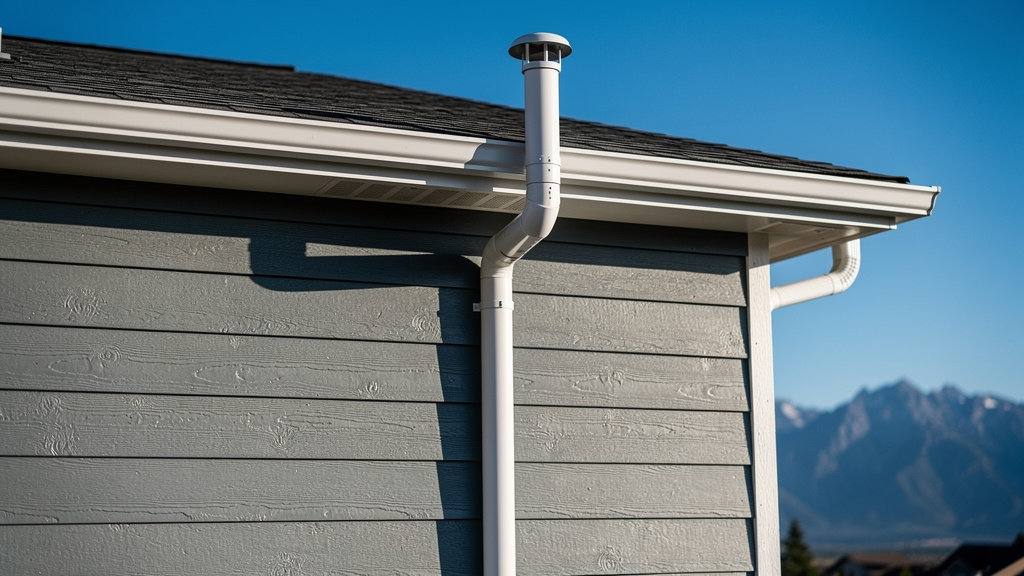
A sub-slab depressurization system — the most common setup in Denver homes — uses a pipe through the foundation slab and an electric fan to draw radon out from under the home before it enters. These systems are effective, but fans do fail. The average fan lifespan runs 10–15 years. A system with a dead fan is essentially inactive.
Disclosure requires sellers to share whether a system exists and its known service history. Buyers should verify the fan is running during inspection — there’s typically a U-tube manometer gauge on the pipe that shows suction is active. If the gauge reads flat, the fan may have failed.
Post-inspection, a quick radon test to confirm levels are below 4.0 pCi/L) is worth doing even with a system in place. We run into homes regularly where the system was installed correctly but the test-after confirmation was never done. The only way to know it’s working is to measure.
—
How Do Colorado’s Disclosure Requirements Compare to Nearby States?
| State | Seller Must Disclose Known Results | Testing Required at Sale | Mitigation Required at Sale | Law Updated |
|---|---|---|---|---|
| Colorado | Yes | No | No | August 2023 |
| Wyoming | No statewide law | No | No | N/A |
| Utah | Yes (via general disclosure) | No | No | Ongoing |
| New Mexico | Yes | No | No | Ongoing |
| Kansas | Yes | No | No | Ongoing |
Colorado’s 2023 update made its radon-specific disclosure language more explicit than most neighboring states. The requirement to include radon on the standard Seller’s Property Disclosure form means it can’t be casually overlooked the way it might be in states with only general hazard disclosure clauses.
—
When Should You Call a Professional Before Closing?
If a seller’s disclosure shows elevated levels, an existing mitigation system with no recent service record, or if the disclosure says “unknown” and the home has a basement or slab-on-grade foundation — those are all signals to bring in a certified radon professional before closing, not after.
A professional test during the inspection period takes two to seven days. Scheduling is typically available within a day or two in the Denver metro, which fits comfortably within most inspection windows. If results come back at or above 4.0 pCi/L, a mitigation system can often be installed within a week of the decision to proceed.
Colorado requires radon mitigation professionals to maintain licensing through the Department of Regulatory Agencies (DORA). When hiring, confirm the contractor holds a current DORA license and carries professional liability insurance. Installation on a standard Denver single-family home typically takes four to eight hours in one visit.
Don’t let a real estate timeline pressure you into skipping this step. Radon exposure is cumulative — the longer someone lives in an elevated-radon home without a working mitigation system, the greater the health risk. Getting clarity before closing is far simpler than retrofitting a negotiation after you own the property.
—
What Denver Homeowners Should Do Next
If you’re selling, pull together any radon test results you have — even old ones — and be ready to disclose them on the Seller’s Property Disclosure form. If you’ve never tested, say so honestly. If a mitigation system is installed, document its installation date and last service check.
If you’re buying, request the disclosure form early and read the radon section carefully. If the seller marks “unknown,” schedule a short-term professional test during your inspection period. If results come back elevated, get a mitigation estimate before finalizing your offer terms.
If you’re a Denver homeowner not currently in a transaction, Colorado’s high radon rates make baseline testing worthwhile regardless of when you bought. Long-term tests ($25–$60 DIY) give a more accurate picture of year-round exposure than short-term tests alone.
—
FAQ
Q: Do Colorado sellers have to test for radon before listing?
No. Colorado law requires sellers to disclose known results, but does not require testing before listing. Sellers with no prior test simply mark “unknown.”
Q: What form is used for radon disclosure in Colorado real estate?
Colorado’s standard Seller’s Property Disclosure form includes a dedicated radon section. All residential sellers complete this form as part of the transaction.
Q: Can a buyer require radon mitigation as a condition of sale in Colorado?
Yes. Buyers can negotiate mitigation as a contract condition if testing reveals elevated levels. This is common in Denver metro transactions where results come back above 4.0 pCi/L.
Q: Does Colorado’s radon disclosure law apply to new construction?
New construction disclosure requirements vary. Buyers of new homes should ask builders whether radon-resistant construction techniques were used and request any available test results.
Q: When did Colorado update its radon disclosure law?
Colorado’s updated radon disclosure statute took effect August 2023, making radon-specific language explicit in the standard real estate disclosure process.
—
Sources
- U.S. Environmental Protection Agency: Radon action levels, Zone 1 map, and short-term testing guidance
- Colorado Department of Public Health and Environment: Radon FAQ, statewide average radon levels, and mitigation program information
- Colorado General Assembly: Residential real estate disclosure statute (updated August 2023)
- Colorado Department of Regulatory Agencies (DORA): Radon professional licensing requirements
- Colorado Geological Survey: Colorado radon geology and uranium-bearing soil documentation
- Colorado Low Income Radon Mitigation Assistance Program: Program eligibility and benefit levels
—
RadonSweep helps Denver homeowners navigate radon testing and mitigation — whether you’re preparing to sell, evaluating a home before purchase, or just want a clear picture of what’s in your air. If you have test results and aren’t sure what to do next, connecting with a licensed Colorado professional is a straightforward first step.